
As the demand for electric vehicles, energy storage systems, and consumer electronics continues to grow, battery safety has become a critical concern across industries. Traditional monitoring methods focus mainly on temperature and voltage, which often fail to detect mechanical stress or early signs of structural failure.
Suzhou Leanstar Electronics has developed Distributed Array Flexible Pressure Sensors, offering a smarter, more proactive solution for battery safety. With ultra-thin, conformable design and high-resolution distributed sensing, our sensors enable real-time mechanical stress monitoring in battery modules.
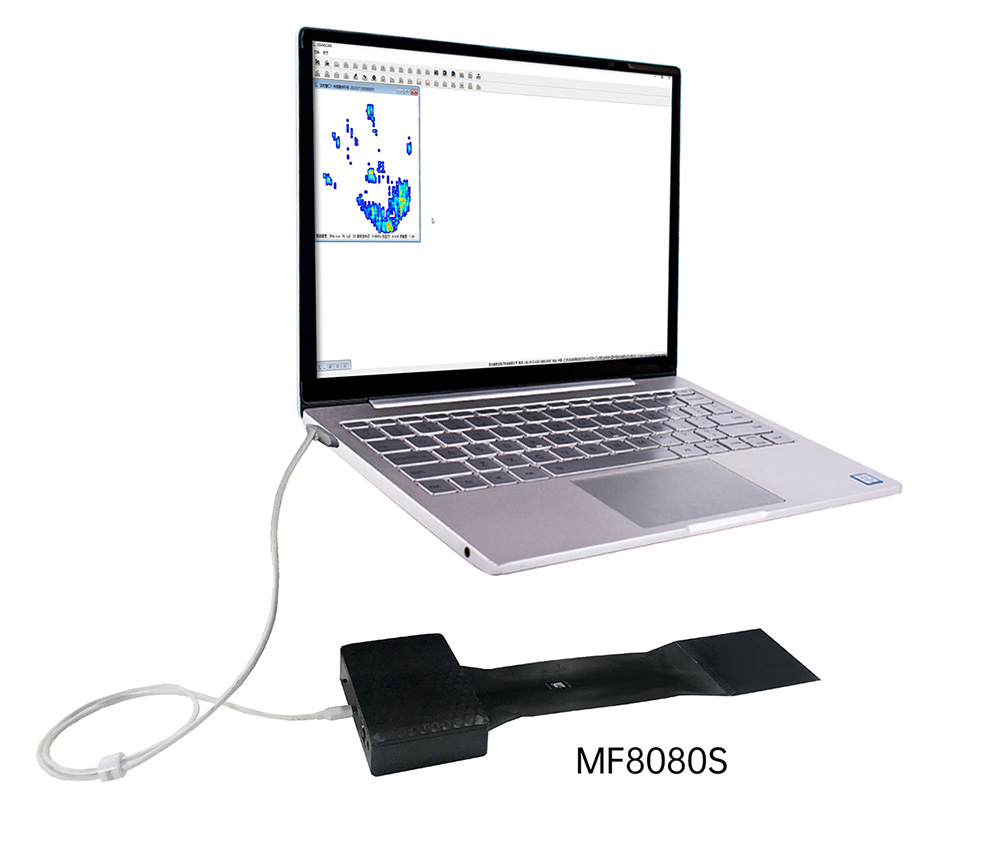
Flexible Pressure Sensor:Adheres directly to the battery surface to monitor internal pressure in real time.
Data Acquisition Module:Transmits sensor-collected data to the analysis system.
Data Analysis System:Processes and analyzes the data to provide real-time feedback on battery status and issue alerts when necessary.
Display & Monitoring Interface:Presents visualized data to users, enabling quick and informed decision-making.
Ultra-thin and Flexible:
The sensor features an ultra-thin profile, allowing it to conform to the battery surface without occupying additional space or interfering with battery design.
Its flexible structure accommodates battery deformation, eliminating constraints from rigid components.
Long-term Stability and Reliability:
Designed for durability, the flexible sensor can operate stably over extended periods in typical battery environments, minimizing the risk of damage or failure.
High-Resolution Matrix:
Customizable array layout enables precise localization of pressure changes.
Fast Response:
Millisecond-level reaction time ensures timely detection.
Robust & Durable:
Long-term stability, heat resistance, and customizable encapsulation available.
Easy Integration:
Supports I²C, SPI, UART communication; compatible with existing BMS systems.
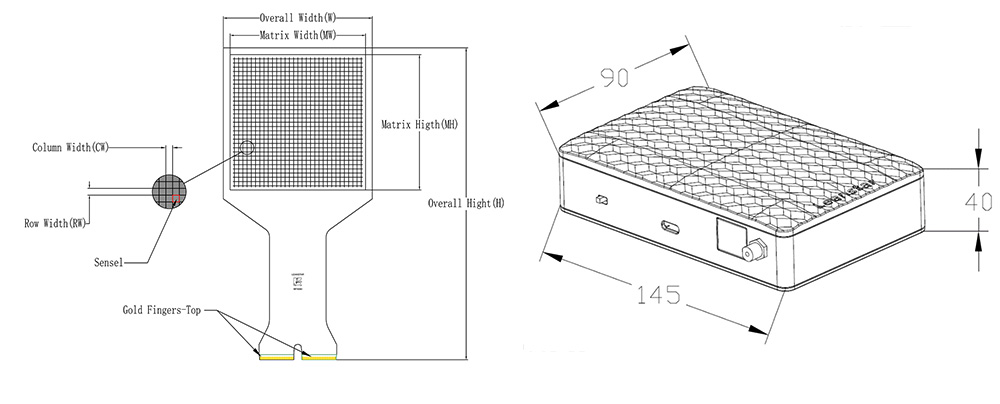
| Parameter | Size(mm) | |
| MF8080L | MF8080S | |
| Overall Hight | 368.5 | 325.5 |
| Overall Width | 176 | 92 |
| Matrix Hight | 160 | 80 |
| Matrix Width | 160 | 80 |
| Colum Width | 2 | 1 |
| Row Width | 2 | 1 |
| Sensing Points | 6400 | |
| Force Range | 7Mpa | |
| MF8080-Handle | L145*W90*H40mm | |
|
Model |
LeanScan MF8080 |
|
Scanning Speed |
80Hz |
|
Scan Points |
6400 Sensing points |
|
Interface Type |
USB2.0,type-C |
|
Power Supply |
0.45A,USB |
|
Pressure Resolution |
15bit |
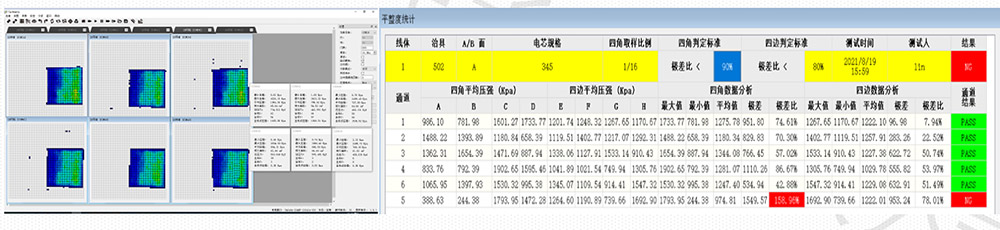
To meet the specific needs of pressure monitoring during battery formation, Suzhou Leanstar has developed a multi-channel sensing and acquisition system that can simultaneously monitor pressure distribution at multiple locations—front, middle, and rear sections of formation machines.
By embedding our distributed array flexible pressure sensors on the battery surface or internal shell, the system captures real-time stress distribution and subtle deformation trends caused by heat expansion, gas release, or packaging stress, enabling manufacturers to:
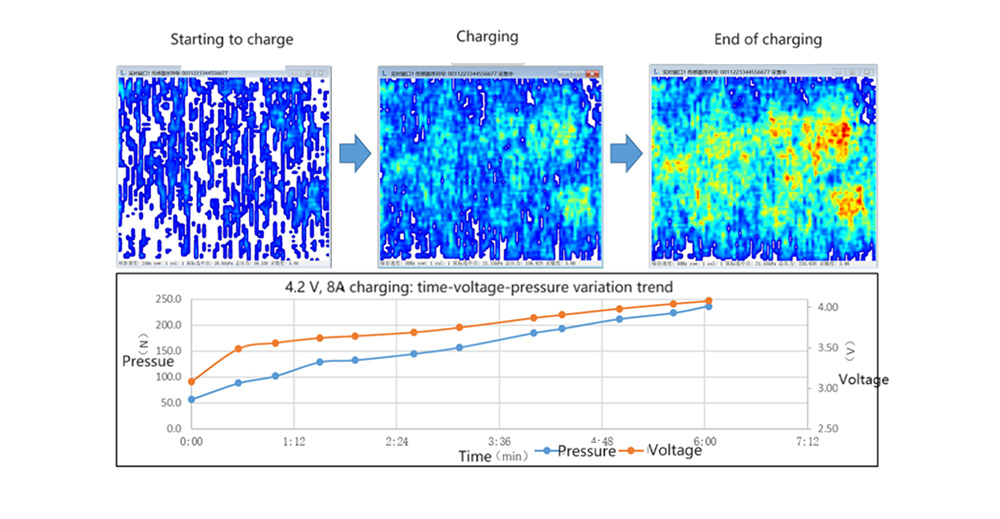
Charging process: During charging, the battery voltage shows an upward trend, and the total expansion pressure monitored by the sensors also increases
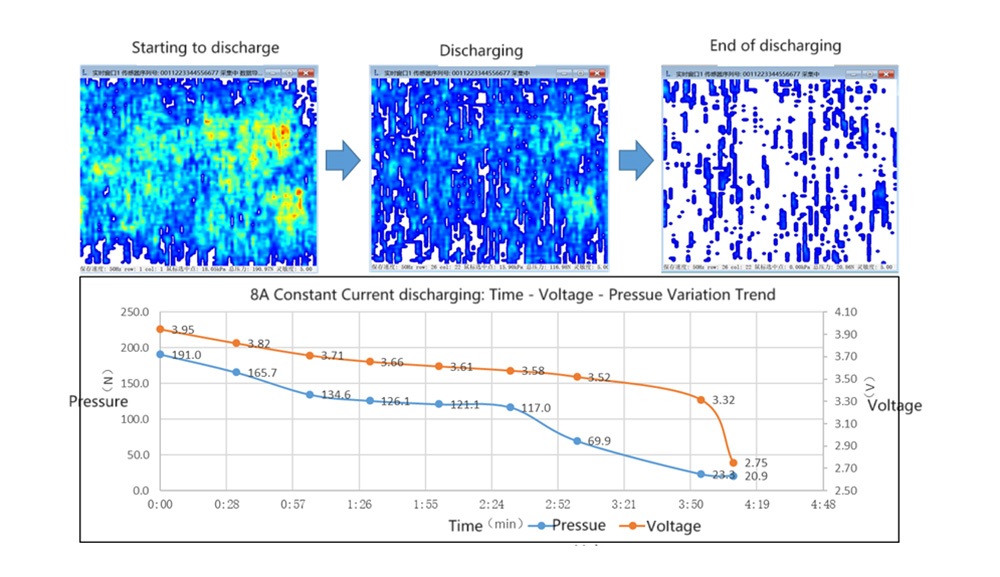
Discharging process: During discharging, the battery voltage shows a downward trend, and the total expansion pressure monitored by the sensors decreases accordingly.
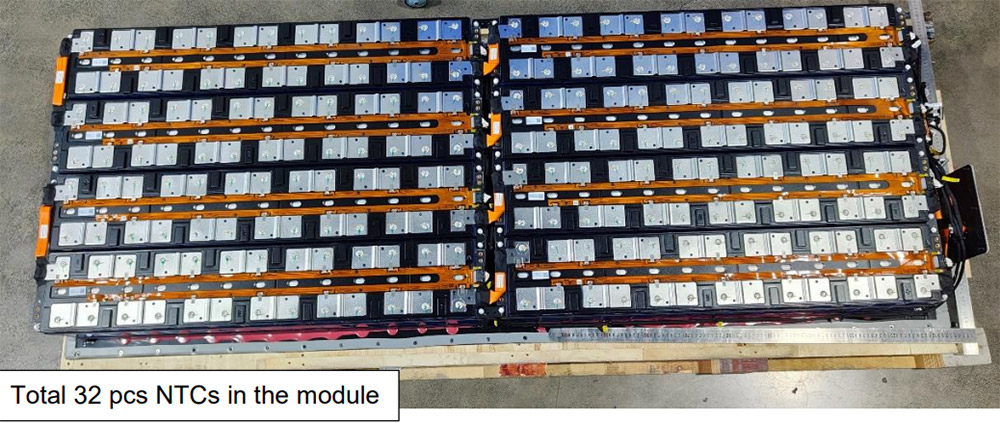
During operation, lithium-ion batteries may swell due to heat, internal gas generation, or material fatigue. Such deformation often occurs unevenly across different parts of a single cell or a battery module. This leads to relative displacement between layers and materials, potentially tearing the separator and causing internal short circuits.
As lithium electrolytes are highly flammable, such short circuits can result in leakage, fire, or even explosion. This mechanism is considered one of the primary causes of EV battery fires.
The most effective way to control such risks is by embedding flexible pressure distribution sensors inside the battery module. These sensors visualize force distribution and identify areas of uneven swelling, enabling early detection and predictive maintenance before a failure occurs.
EV Battery Packs:Monitor for swelling, abnormal compression, or stress accumulation during operation.
Energy Storage Systems:Detect early signs of gas expansion or internal deformation across stacked layers.
Consumer Electronics:Prevent damage from unnoticed battery bulging in smartphones, laptops, or tablets.
Battery Manufacturing:Evaluate press-fit quality, packaging integrity, and early-stage deformation during production and QC.



 English